The Jewel of the Phobjikha Valley:
A History of Gangtey Monastery
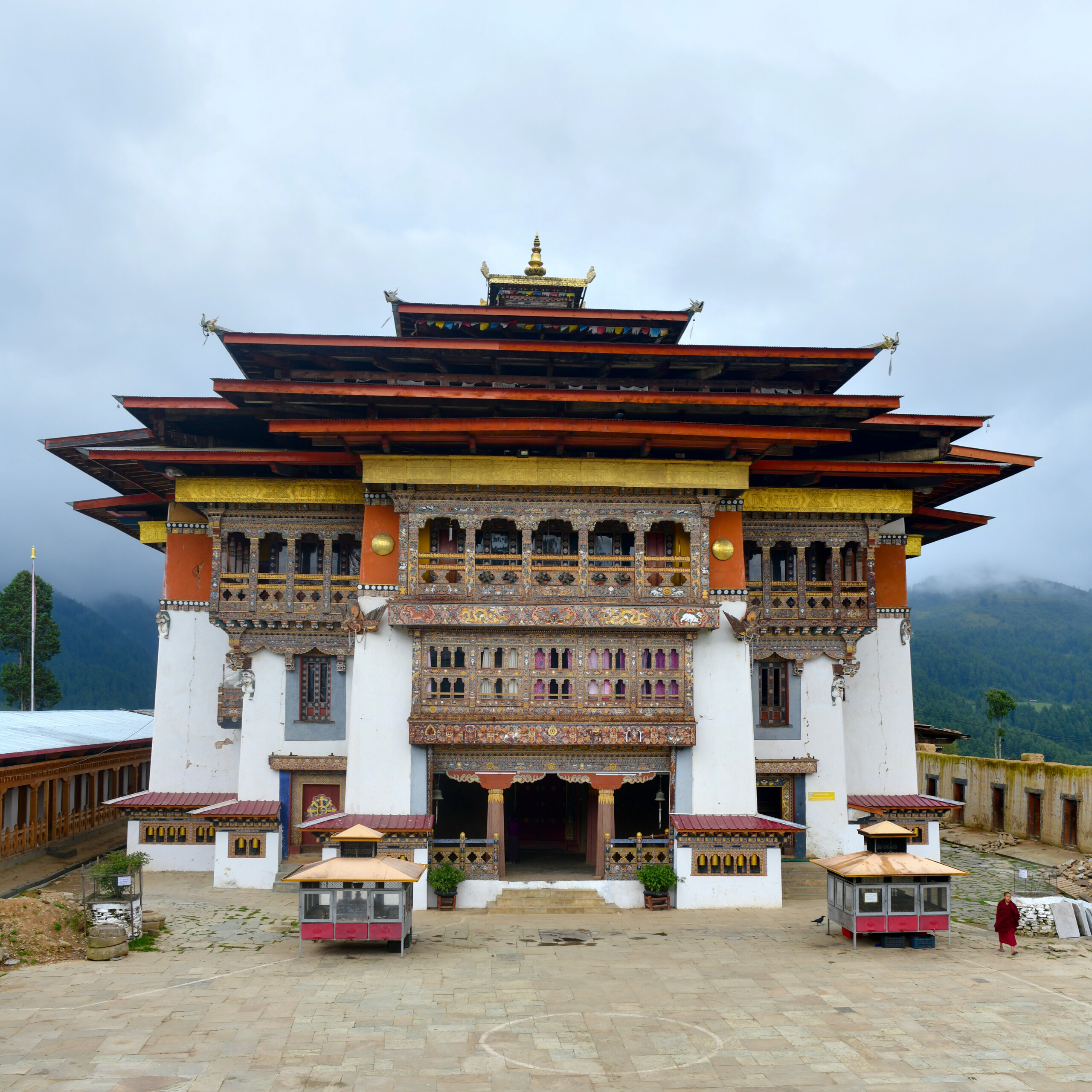
High in the central highlands of Bhutan, within the Wangdue Phodrang District, sits one of the most revered sites in the Nyingmapa tradition of Vajrayana Buddhism: Gangtey Monastery. This monastery is more than just a structure; it is the spiritual heart of the Peling tradition and the main seat of the legendary treasure revealer, Terton Pema Lingpa.
The Dance of the Cranes
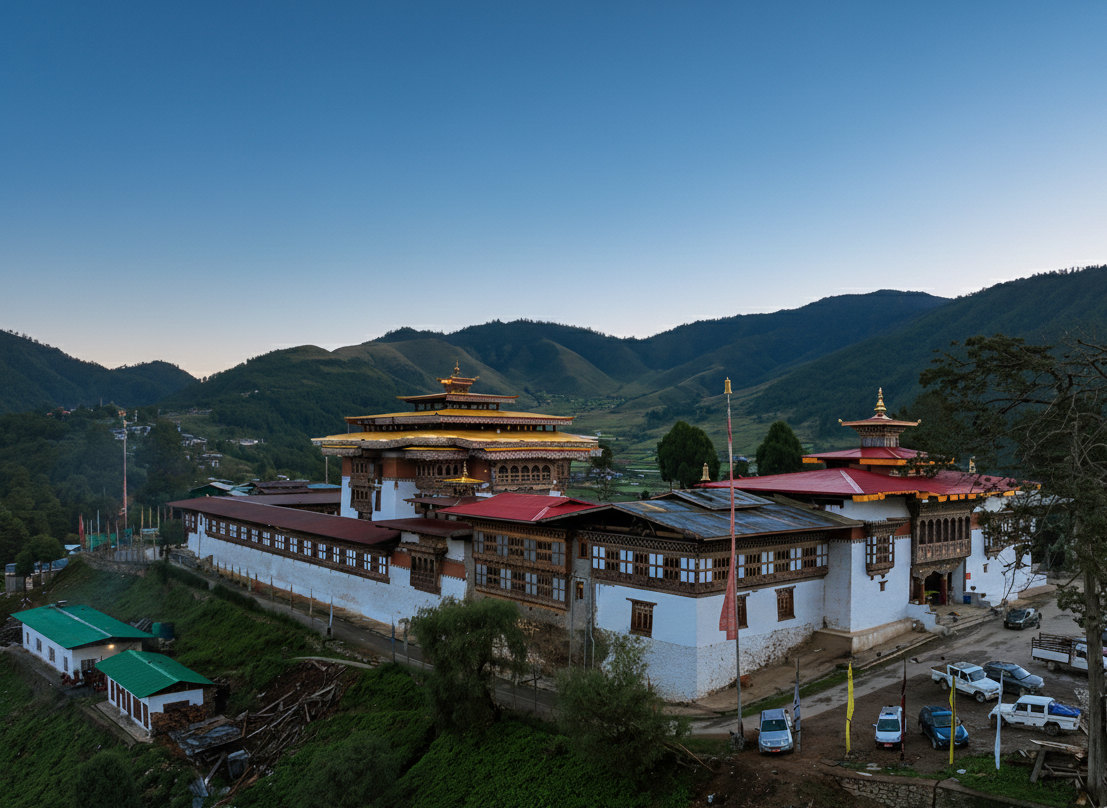
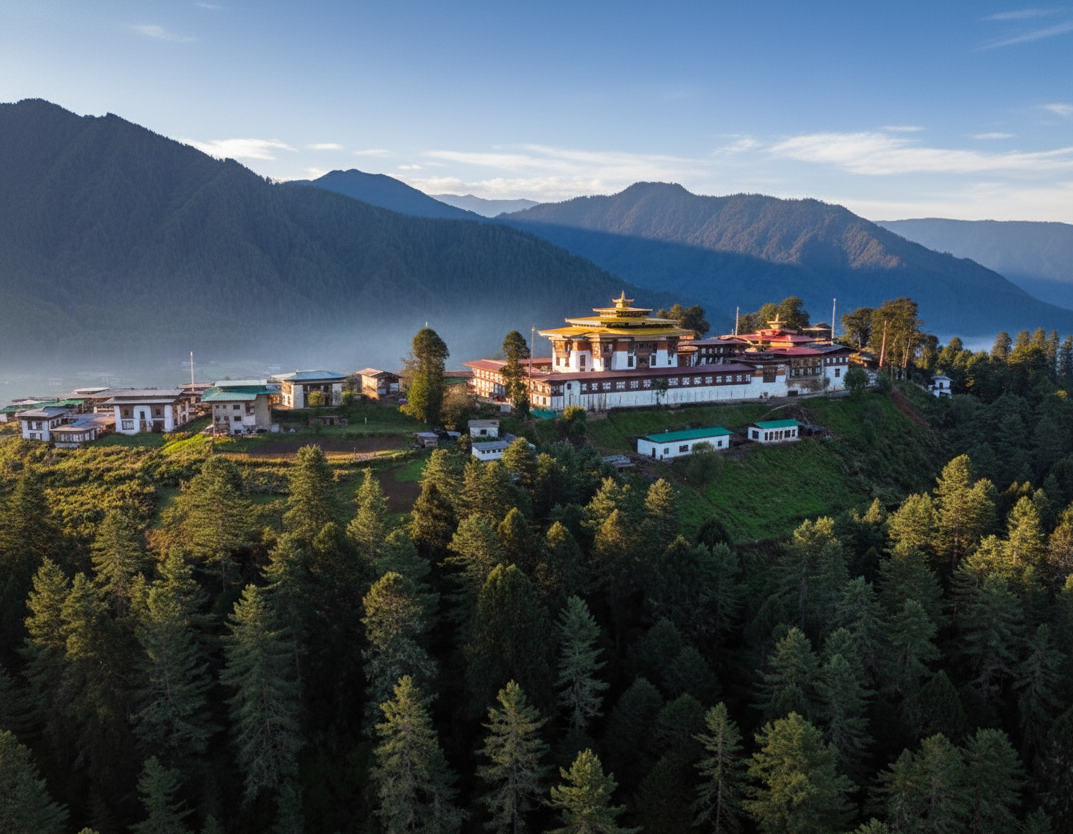
The monastery is perched on a spur overlooking the breathtaking Phobjikha Valley, a vast, marshy bowl roughly 3,000 meters (9,800 ft) above sea level. This U-shaped valley is famous not only for its beauty but for its winter guests. Every year, the endangered black-necked cranes migrate here from Tibet to roost. Local legend speaks of a profound spiritual connection between the birds and the monastery. It is said that upon their arrival in winter, and again before their departure in spring, the cranes fly three distinct circles around the monastery—a moving gesture of reverence to the sacred ground below.
A Landscape of Giants
The geography surrounding the monastery is as dramatic as its history. To the west, the Black Mountains rise up, standing guard at elevations exceeding 5,000 meters (16,000 ft). Below, the Nake Chuu river winds its way through the marshlands. This rugged terrain is the domain of nomadic shepherds and yak herders, who have lived in harmony with the land for centuries. From its vantage point, the monastery commands sweeping views of this hidden valley, standing as a silent watcher over the rhythms of nature and rural life.
The Prophecy and the Treasure
The history of Gangtey begins long before its first stone was laid. It traces back to the 8th and 9th centuries with Guru Rinpoche, the saint who brought Buddhism to Bhutan. To protect the dharma during turbulent times, the Guru hid sacred treasures, or terma (scriptures and images), throughout the landscape, intended to be discovered by future masters.
Centuries later, in the late 1400s, Pema Lingpa—considered an incarnation of Guru Rinpoche himself—was born. At age 25, guided by a vision of 108 treasure coves, he embarked on a spiritual quest. His success in revealing these hidden treasures earned him the title ” Terton” and cemented the roots of Buddhism deep in Bhutanese soil.
During a visit to the Phobjikha Valley to bless the people, Pema Lingpa looked up at the mountain spur and made a prophecy: one day, a descendant of his would build a monastery on that very summit (Gangtey), making it famous as the seat of his lineage.
The Fulfillment of a Legacy
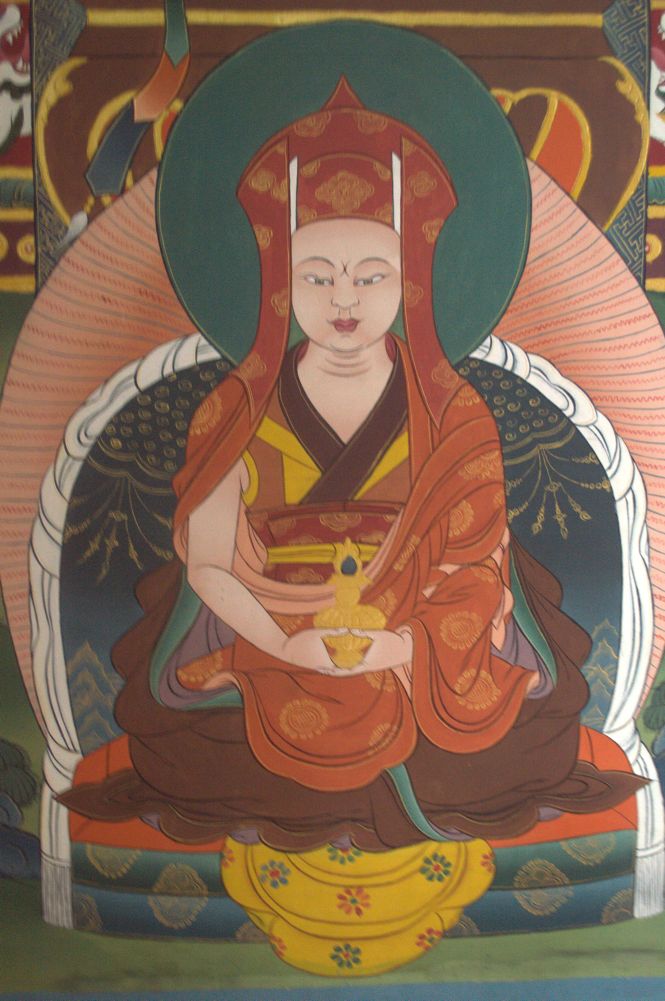
The prophecy came to fruition in 1613, when Pema Lingpa’s grandson, Rigdzin Pema Tinley (1564–1642), established the monastery. As the first Gangteng Tulku (spiritual head), he built the initial monastery. The monastery was later expanded by his successor and son, the second Tulku Tenzing Legpai Dhendup (1645–1726), who transformed the modest structure into the imposing Dzong-style fortress we recognize today. The lineage of Pema Lingpa is not only spiritual but royal. The ancestry of Bhutan’s ruling family, the Wangchuck Dynasty, is traced directly to the Dungkhar Choje clan—a subsidiary of the Khouchung Choje, founded by Kunga Wangpo, the fourth son of Pema Lingpa. Thus, the history of the monastery and the history of the Bhutanese monarchy are inextricably enshrined in the same bloodline.
A Modern Renaissance
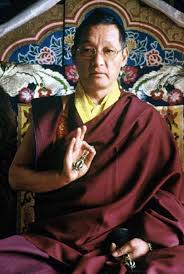
Though centuries old, Gangtey Monastery remains a living, breathing institution. Between 2002 and 2008, the complex underwent a massive restoration under the guidance of the present Gangteng Tulku, H.H. Rigdzin Kunzang Pema Namgyal.
This labor of love culminated on October 10, 2008, when the rebuilt monastery was consecrated. The ceremony was graced by the Greath Fourth, Hi Mayesty The King of Bhutan, marking a new chapter for the site. Today, restored to its original glory, Gangtey stands as a beacon of the Peling tradition, watching over the valley where the cranes still dance in the winter sky.