In the vast and intricate pantheon of Vajrayāna Buddhism, few figures command the immediacy and transformative power of Kurukulle. Resplendent in the Lotus family of the Buddha Amitābha, she is not merely a deity of worship but the embodiment of vaśīkaraṇa—the enlightened activity of magnetizing. She represents a profound spiritual paradox: the use of passion to transcend attachment, and the power of enchantment to awaken the mind to the Dharma.
The Nature of Enlightened Attraction
Kurukulle is revered as a fully enlightened ḍākinī, a sky-goer who symbolizes the indivisibility of great bliss and emptiness (mahāsukha-śūnyatā). While lesser interpretations might view her role as one of worldly influence, her true purpose is far more esoteric. She is invoked to harmonize the external world with the practitioner’s internal spiritual intent. By magnetizing favorable circumstances, resources, and beings, she does not serve the ego; rather, she bends the chaotic forces of existence toward the path of liberation. Her magic is the alignment of reality with the ultimate truth.
Iconography: A Dance of Liberation
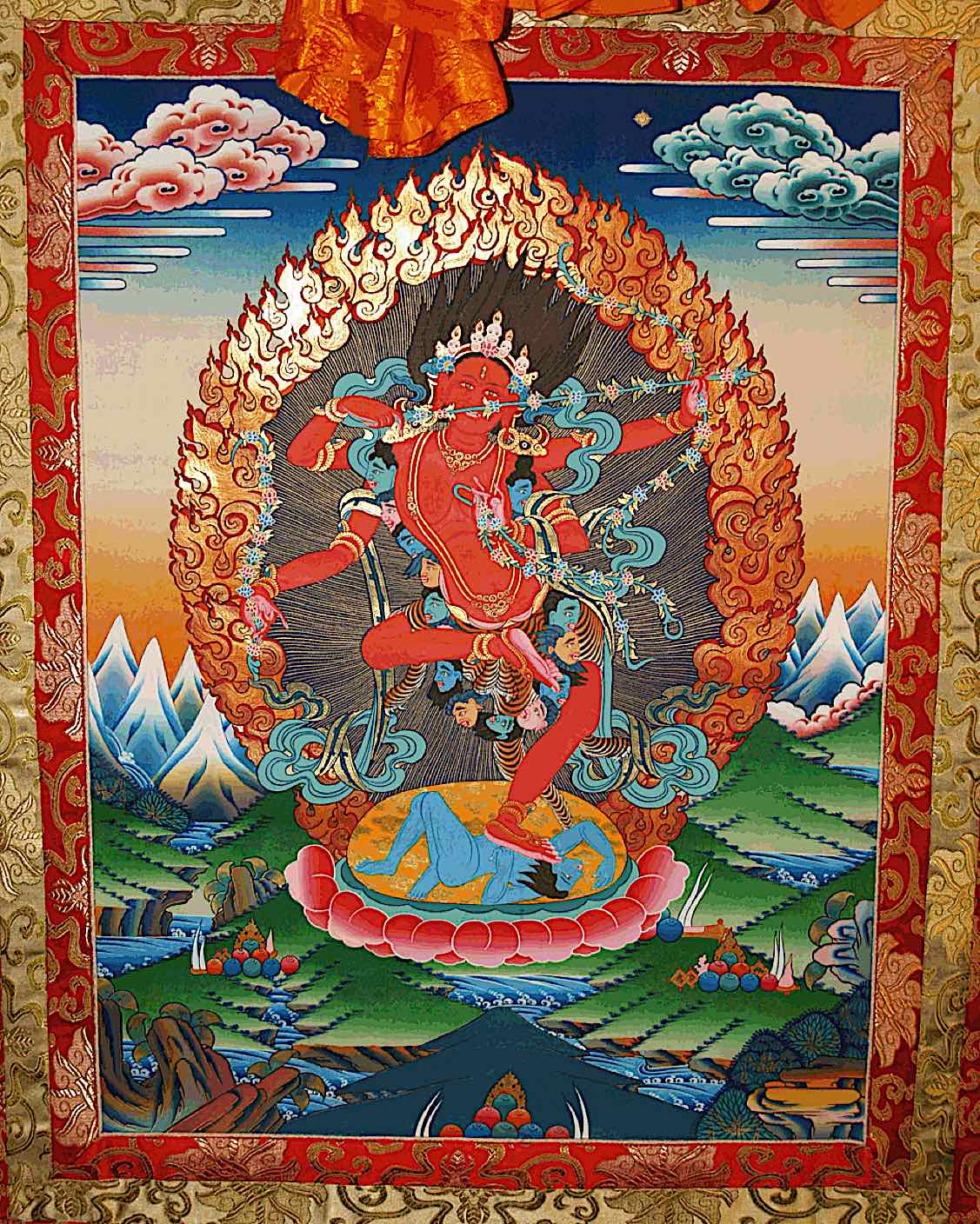
To gaze upon the iconography of Kurukulle is to witness a visual sermon on the transmutation of desire. She is traditionally depicted in a brilliant, ruby-red hue, dancing in a dynamic, semi-wrathful posture that suggests unceasing energy. Adorned with bone ornaments and garlands of flowers, she is a figure of terrifying beauty.
Whether appearing with two, four, six, or eight arms, her implements remain consistent in their symbolism. She wields a bow and arrow constructed of flowers, a noose, and a goad. These are not weapons of destruction, but instruments of salvation: the flowery arrow pierces the hardened ego; the noose draws wandering minds back to the Dharma; and the goad spurs the sluggish spirit toward awakening. Crowning her appearance is the image of Amitābha, the Buddha of Limitless Light, sealing her lineage within the family of compassion and discernment. While her red form is paramount, representing the transformation of passion, she also manifests in peaceful white forms, extending her influence into the realms of healing and longevity.
Lineage and Liturgy
Theologically, Kurukulle is understood as a dynamic emanation of the Goddess Tārā, who herself flows from the heart of Avalokiteśvara, the Bodhisattva of Compassion. Thus, Kurukulle’s “enchantment” is, at its core, the irresistible gravity of compassion itself—a force that draws all beings toward the cessation of suffering.
Her prominence in Indian Buddhist esotericism is well-documented in foundational tantric cycles such as the Hevajra Tantra and the Sādhanamālā. However, the most exhaustive account of her practice is found in the Kurukullākalpa (Toh. 437). Preserved in both Sanskrit and Tibetan, this text outlines a vast array of ritual technologies—from sādhanas (meditative visualizations) to fire offerings and medicinal rites. These ancient manuals reveal a deity who bridges the gap between the pragmatic and the transcendent, offering protection in the relative world while guiding the practitioner toward absolute liberation.
The Alchemy of Desire
Ultimately, Kurukulle stands as a supreme yidam, or meditational deity, for those seeking to harness the red, passionate force of enlightenment. Her method is not one of coercion or fear, but of overwhelming radiance. She embodies one of the most sophisticated principles of Tantra: that desire, often seen as a poison in other traditions, can be skillfully recognized, purified, and transformed into the fuel for enlightenment. In the presence of Kurukulle, attachment is burned away, leaving only the pure, magnetic fire of wisdom.